
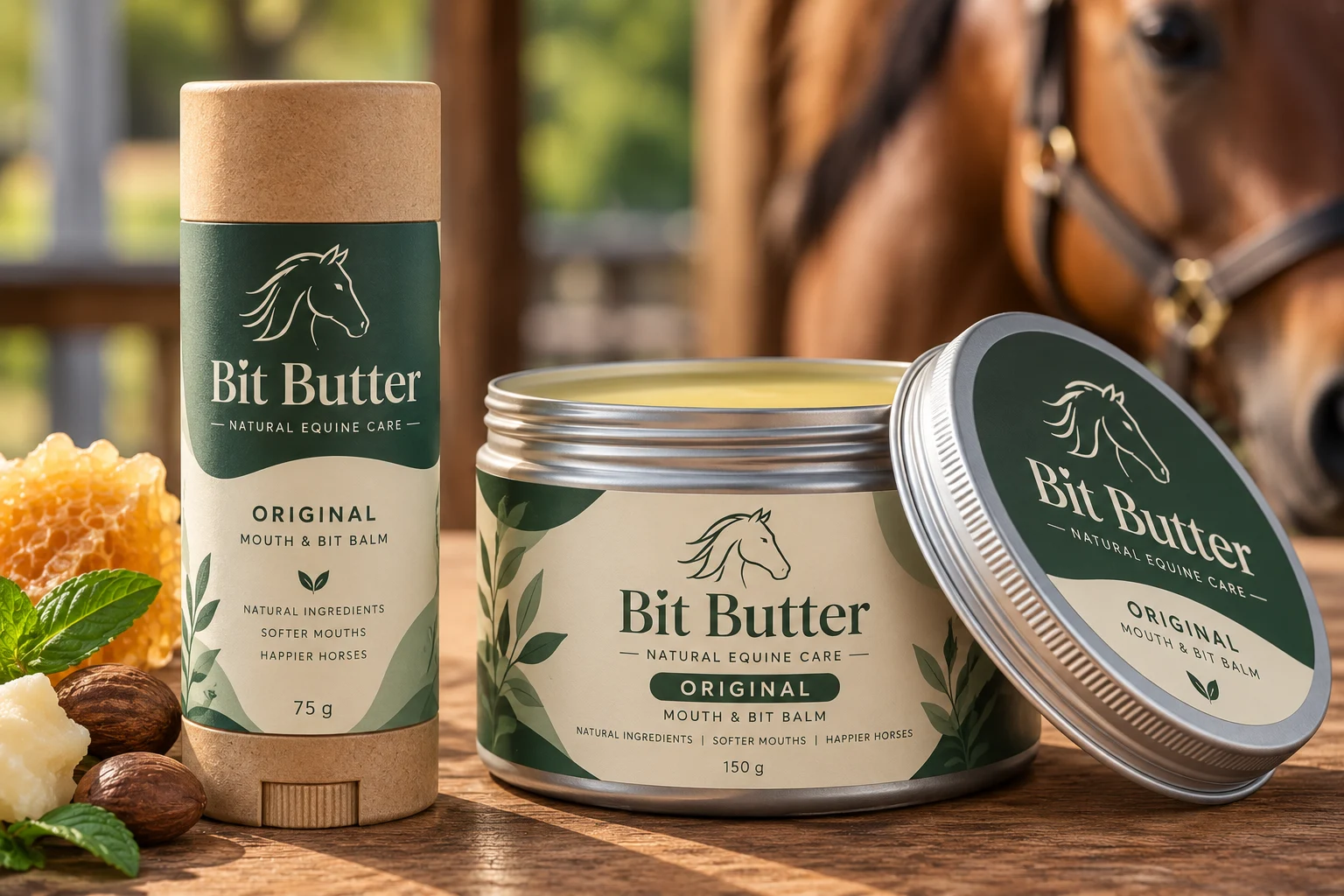
A useful equine-care product should be easy to understand. What is it for? Where does it belong in a normal routine? Which format is practical, and what should you check before using it? This guide brings those questions together for Bit Butter, our equine mouth and bit balm for New Zealand riders.
The Bit Butter range includes Original, Apple and Honey, each offered in a 75 g push-up tube or a 150 g tub. The starting point is everyday care, with clear boundaries around what a balm can do. It is not a treatment for an injury, a way to correct unsuitable tack or a shortcut around a horse’s discomfort.
What is mouth and bit balm?
A mouth and bit balm is a care product intended for the mouth and bit area. Bit Butter’s role is conditioning and lubrication as part of an established tack-up routine. Think of it as one small item alongside clean equipment and attentive handling. Its purpose does not replace the more fundamental questions of whether your horse is comfortable, the bit fits and your equipment is suitable.
Product names in this category can sound similar. That does not mean every product has the same formula or directions. Read the information supplied with the exact product you own, including the intended application area and any restrictions. Do not transfer instructions from another brand or improvise a recipe because its ingredients appear familiar. The label is the relevant starting point for use.
The two Bit Butter sizes
The 75 g push-up tube is NZ$14.95. It is a firm balm format, rather than a squeezable cosmetic tube. Its compact presentation suits a grooming bag or a tack box that travels between home, lessons and the yard. Choose it when having a small container in the place you prepare matters more than keeping the largest possible amount on the shelf.
The 150 g tub is NZ$19.95. This is the larger format for a regular place in the tack room. It contains twice the stated weight of the tube, but that does not mean a guaranteed number of rides: application amounts and frequency differ. Neither pack size changes the importance of keeping the product clean, replacing the lid or following the directions. View both options in the Bit Butter shop.
Decide where it belongs before you buy
Picture a normal riding day, rather than a perfectly arranged shelf. Where do you groom? Where do you set down a lid? Can you reach clean hands or a clean applicator if your directions call for one? Where will the container live after the horse is untacked? These ordinary details make a product easier to use consistently.
A person who prepares at home every day might prefer the tub beside their usual care kit. A rider who carries equipment from the car may prefer the tube in a dedicated compartment. You do not need both formats to create a thoughtful routine. Start with the place where one will actually be useful, and keep enough room around it that it is not buried beneath muddy brushes or loose hardware.
Fit application into an attentive routine
Prepare your equipment before asking the horse to stand while you search for things. Check the product label, make sure your hands and the relevant equipment are clean, and use only the amount and application method directed. Replace the lid promptly. Giving each of those actions a clear place in the routine is more useful than rushing through them because you are late for a lesson.
The horse’s response remains the priority. If there is unusual reluctance to accept the bridle, visible damage around the mouth or another sign that something is wrong, pause the normal routine. Do not apply more product in an attempt to continue riding. An appropriate veterinarian, equine dental professional or qualified bit fitter may be needed, depending on the concern. You can read more in our mouth and bit-area care guide.
Keep the container and its contents clean
A tack box collects dust, hair and the leftovers of busy days. Give a balm its own dry place rather than allowing it to roll among cleaning tools. Keep the lid with the container while using it, and avoid setting the inside of the lid on a dirty bench. If several people use the kit, agree where the product belongs and whose horse it is intended for.
Do not return an excess portion from a dirty surface to the container. If you are unsure whether a product has become contaminated or damaged, set it aside and ask for guidance. Removing visible dirt is not proof that a product is suitable to keep using. These habits are about sensible handling; they are not claims about a particular product’s microbiology or shelf life.
Store with the actual conditions in mind
Follow the pack’s storage instructions and keep the lid on between uses. A shaded cupboard is a different environment from a car boot parked in summer sun. Likewise, a tidy shelf beneath a leaking roof is not a good storage place simply because it is indoors. Check the spot at the time of day you usually ride, not only on a cool morning.
Keep the original label legible so you can refer to the directions and any date or batch information supplied. Do not transfer balm into an unlabelled container just to save space. If the product’s appearance, smell or packaging changes unexpectedly, ask the supplier before continuing. We do not publish a melting temperature or a fixed storage life without confirmed product information.
Ingredients and product claims
The complete ingredient list belongs on the product information and packaging. Photographs of botanical props or natural textures are not an ingredient declaration. If a horse has a known sensitivity, check the actual list with the appropriate professional rather than assuming a product is suitable because it is marketed as gentle, natural or premium.
Equally, a balm should not be described as treating sores, preventing infection or fixing a horse’s way of going. At Bit Butter, we keep our language focused on its care-oriented purpose. Competition use also calls for checking the current event rules and the exact product ingredients. An everyday care product is not automatically approved for every competition, and a website article cannot provide that approval.
What a first week can tell you
The first week is an opportunity to make the routine workable. Notice whether the product is easy to find, whether its storage place stays clean and whether the chosen format fits the kit you carry. You might discover that the shelf beside the grooming area is convenient, or that the container needs a separate pouch to keep it clear of hair and grit.
Keep observations factual. An entry such as “tube stored in the upper tack-box compartment; label checked; lid replaced” is useful for routine management. Avoid treating a handful of rides as evidence of a medical benefit or assuming that every change in the horse’s behaviour is caused by one product. Several elements of horse management change at once, and concerns deserve appropriate assessment rather than an informal experiment.
Questions riders often ask
Do the sizes contain different flavours?
The range offers Original, Apple and Honey, with each available in a 75 g tube or 150 g tub. Choose the flavour and size separately. A flavour name is not a complete ingredient declaration, so check the exact product information rather than inferring ingredients from names or ingredient-inspired photographs. The shop listing shows the available combinations.
How many applications will I get?
We do not promise a fixed application count. The amount used according to the label, riding frequency and handling all affect how quickly a pack is finished. A larger container may suit regular use at home, but buying more than you can comfortably store and use is not automatically better value. Choose the format around your routine first.
Can balm make an unsuitable bit comfortable?
No care product should be used to compensate for a fitting problem. A bit, bridle and horse need to be considered together, with qualified help when necessary. If you are uncertain about fit or notice changes, our beginner’s guide to bits explains the questions worth taking to a professional; it does not prescribe a setup.
For a shared kit, identify the selected flavour as well as the size. Leave the product in its original container and tell other carers which pack belongs to the horse. Clear identification supports appropriate use and prevents assumptions when several similar containers are stored together.
A simple starting plan
Choose a pack, read its label and decide on a clean storage place. Add application to the part of the routine where it can be done calmly, and return the container to the same place afterwards. Keep cleaning the bit as a separate job. Review the routine when you change yards, travel to a lesson or move into a different season.
For the broader sequence, use our tack-up checklist. For product questions, visit the Bit Butter FAQs. The aim is a clear, manageable routine that leaves room to notice the horse in front of you. One well-chosen product can have a place in that routine without becoming a substitute for the essentials around it.